
This page has been automatically translated.
The RELIEF study is investigating how different fluid intake strategies influence the health of premature babies. Specifically, the aim is to find out whether the amount of fluid intake in the first weeks of life of premature babies has an influence on the incidence of a chronic lung disease known as bronchopulmonary dysplasia.
The long-term aim is to investigate whether fluid intake has an effect on the child's growth, respiratory health and neurological development.
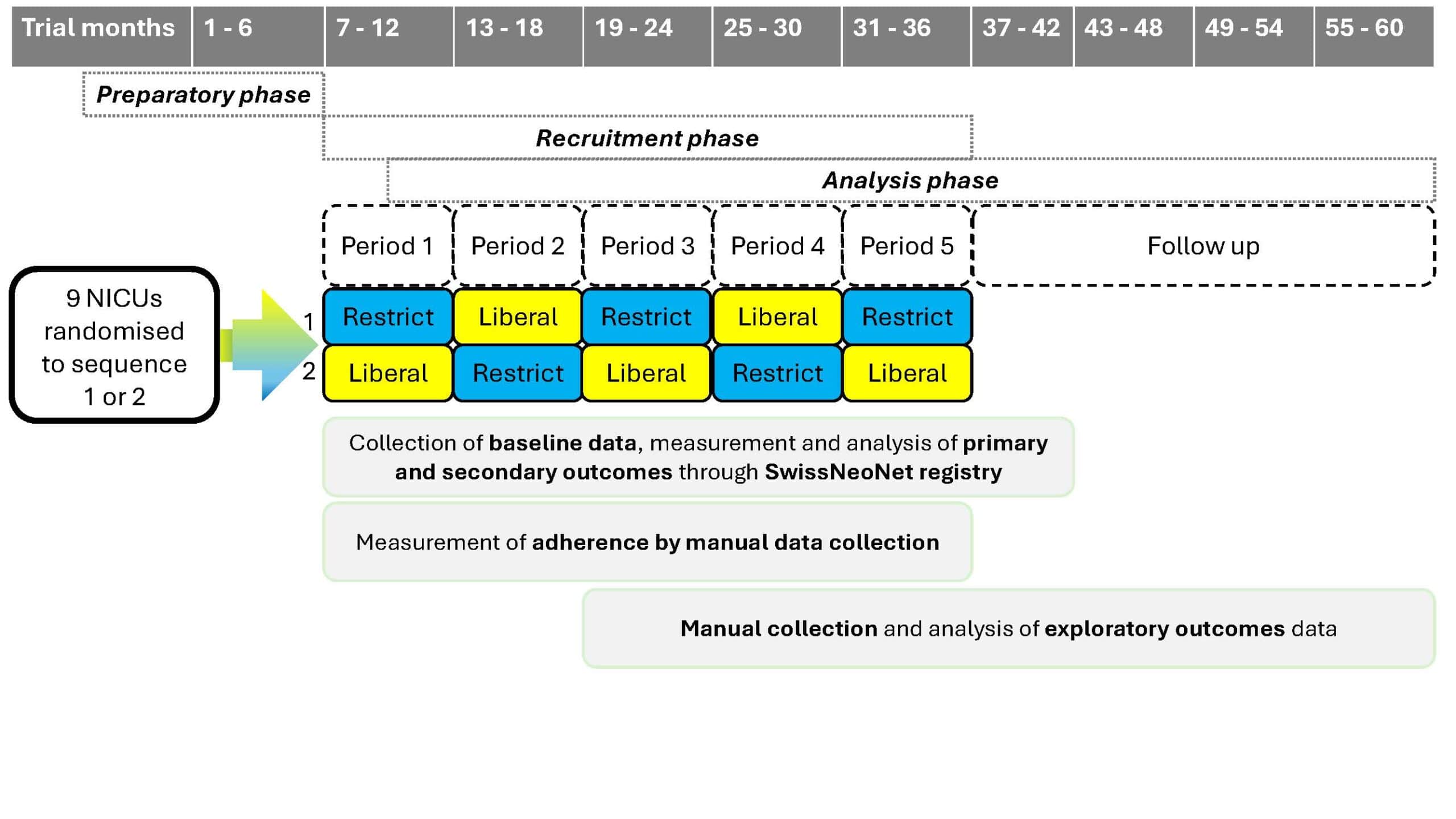
The research project is being carried out in all nine neonatal intensive care units (NICUs) in Switzerland that specialise in the care of premature babies (Aarau, Basel, Bern, Chur, Geneva, Lausanne, Lucerne, St. Gallen and Zurich). As part of the standard treatment, the amount of fluids for premature babies is changed slightly at six-monthly intervals. Each of the participating hospitals is randomly assigned to a specific fluid strategy and changes the amount of fluid every six months. Two treatment strategies are compared: restricted hydration with a smaller amount of fluid and liberal hydration with a larger amount of fluid. Both fluid amounts are within the clinical routine.
A total of 750 premature babies are to take part in the research project over a period of 30 months. The research project started on 1 July 2025 and is due to be completed by the end of 2029.
All premature infants under 30 weeks of age who are cared for in one of the participating hospitals during the study period will receive the standard amount of fluids specified for this period in the hospital. If the legal guardian(s) have consented to the further use of health-related data for research purposes, these data will be used to analyse the RELIEF study.
The RELIEF study is being led by the University Children's Hospital Basel (UKBB) and funded by the Swiss National Science Foundation (SNSF).
KSA Children's Hospital Aarau, Clinic for Neonatology
Tellstrasse 25, 5001 Aarau
Principal Investigator
KD Dr Philipp Meyer
Study Team
Dr Gabriel Konetzky, MD
Dr Corinne Däster
Dr Agnes Genewein
University Children's Hospital Basel (UKBB)
Spitalstrasse 33, 4056 Basel
Principal Investigator
Prof Dr med Sven Schulzke
Study Team
PD Dr Benjamin Stöcklin
Michel Schrutt
Inselspital Bern, Paediatric Clinic
Julie von Jenner House
Freiburgstrasse 15, 3010 Berne
Principal Investigator
Prof Dr med André Kidszun
Study Team
Dr Marta Busso
Cantonal Hospital Graubünden
Department of Paediatrics and Adolescent Medicine
Loëstrasse 170, 7000 Chur
Principal Investigator
Dr Bjarte Rogdo
Study Team
Dr Bettina Willi
Hôpitaux universitaires de Genève (HUG)
Unité de Néonatologie
Maternity
30, Bvd de la Cluse, 1205 Genève
Principal Investigator
Prof Dr med Riccardo Pfister
Study Team
Dr Francisca Barcos Munoz, MD
Dr med Dimitra Papasavva
Centre hospitalier universitaire vaudois (CHUV)
Service de néonatologie
Maternity
Av. Pierre-Decker 2, 1011 Lausanne
Principal Investigator
Assoc. Prof. Eric Giannoni
Study Team
Dr med Sébastien Joye
Rebecca Oppenheim
Florence Bellanger
Lucerne Cantonal Hospital Children's Hospital
Spitalstrasse 33, 6000 Lucerne
Principal Investigator
Prof. Dr Martin Stocker
Study Team
Dr Carolyn Luhmann-Lunt, MD
Barbara Imboden
Eastern Switzerland Children's Hospital
Neonatology and Gynaecological Clinic KSSG
Perinatal Centre St. Gallen
Claudiusstrasse 6, 9006 St. Gallen
Principal Investigator
Dr André Birkenmaier
Study Team
Dr Markus Hahn
Dr Nicole Bischof
Ingrid Beck
University Hospital Zurich
Clinic for Neonatology
Rämistrasse 100, 8091 Zurich
Principal Investigator
Prof Dr Dirk Bassler
Study Team
Dr David Glauser
Dr Christoph Rüegger
Claudia Knöpfli
Premature babies born before the 30th week of pregnancy often face significant health challenges. 20% of premature babies in Switzerland who are born more than 10 weeks early develop chronic lung disease, which can also affect growth and brain development in the long term. This happens mainly because the oxygen and ventilation that the children need to survive also attack their very sensitive lungs. As the small blood vessels in the lungs of premature babies are still leaky due to immaturity, the amount of fluid also has an impact. It is not yet known exactly how much fluid premature babies actually need. A reduced fluid intake could lead to less fluid reaching the lungs. This could potentially reduce the need for additional oxygen, ventilation and medication - and therefore also reduce the risk of side effects. However, a reduction in fluid intake means that the food - usually breast milk or speciality milk - needs to be more fortified so that the children still receive sufficient nutrients. These include protein, calories and salts in particular. However, this fortified diet could possibly put a strain on digestion.
The RELIEF research project aims to find out whether premature babies are less likely to develop a chronic lung disease called bronchopulmonary dysplasia (BPD) if they are given less fluid instead of more fluid.
As part of the study preparation, the study design and research objectives were agreed together with parents from the parent representative groups «Premature Babies Switzerland» and «Né Trop Tôt».
The aim of this research project is to improve the treatment of these particularly vulnerable babies by optimising their fluid intake. This research project will investigate whether the amount of fluid intake in the first weeks of life of premature babies has an influence on the incidence of chronic lung disease, bronchopulmonary dysplasia (BPD). Furthermore, it is to be determined whether the two different amounts of fluid influence growth, nutrition, the use of medication, the extent of ventilatory support, neurological development and other complications in premature babies.
Premature babies born before the 30th week of pregnancy and who are in one of the Swiss neonatal intensive care units from the 8th day of life take part in the research project if the legal guardians have consented to the further use of data for research purposes.
Two fluid strategies are compared in order to determine the optimum amount of fluid for premature babies: A restricted fluid volume where the milk is slightly more thickened and a liberal fluid volume with less thickened milk. Both fluid levels are within routine clinical practice and comply with international guidelines for the treatment of premature infants. During the study period, the amount of fluid changes every 6 months. Which amount is given in which hospital at which 6-month period is determined randomly.
For this purpose, follow-up data is collected up to two years after birth. On the one hand, data from the SwissNeoNet register is analysed. On the other hand, further data will be collected by means of parental questionnaires at 12 months and 18-24 months after the calculated date of birth. A study-specific declaration of consent is obtained from the parents/guardians for this purpose.
The study started on 1 July 2025 in all 9 Swiss neonatal intensive care units and is expected to be completed by the end of 2029. The first premature babies were included in the study on 11 July 2025. A total of 750 babies are to be recruited over a period of 30 months (until the end of 2027).
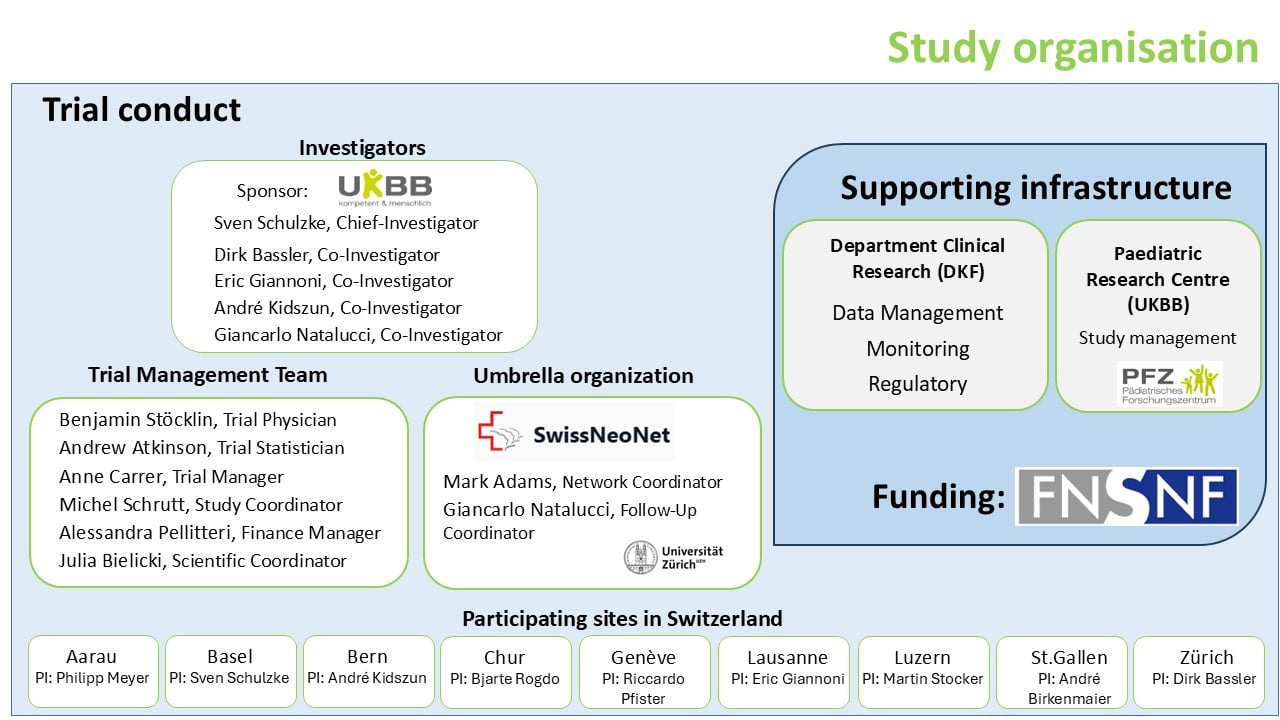
The research project is being conducted under the leadership of Prof Sven Schulzke, The study is being conducted by the University Children's Hospital Basel (UKBB) in collaboration with SwissNeoNet, the network of all nine certified neonatal intensive care units in Switzerland. The study is being conducted in collaboration with the Paediatric Research Centre at the UKBB and the Department of Clinical Research at the University of Basel.
Parents of premature babies are actively involved in the study planning, implementation and dissemination of the results.
The project is fully funded by the Swiss National Science Foundation (SNSF).
The Medgate Kids Line provides quick and uncomplicated medical advice if your child is unwell. The medical team of our partner Medgate is available to you by telephone around the clock.
For emergencies abroad: Call the emergency number of your health insurance company. You will find this number on your health insurance card.
More information: On the Page of the emergency ward you will find everything you need to know about behaviour in emergencies, typical childhood illnesses and waiting times.
144 Outpatient clinic
145 Tox Info Suisse (Poisonings)
117 Police
118 Fire brigade
Which topic would you like to contact us about?
For praise or criticism, please use the Feedback form.